Drawing Prompts: Ideas to Sketch Today, Each With an AI Reference Image
60 drawing prompts to sketch by hand, plus real Omnely AI reference sketches — construction, gesture, line art and value studies from Seedream 5.0 Pro and GPT Image 2.
This page is a working list of drawing prompts for the reader to draw by hand, grouped by subject, with a short selection paired to real Omnely AI reference sketches (construction, contour, gesture, and value studies) so the paper work has something concrete to study from. Omnely is used only to generate those optional reference images — the drawing itself stays with the reader and the pencil.
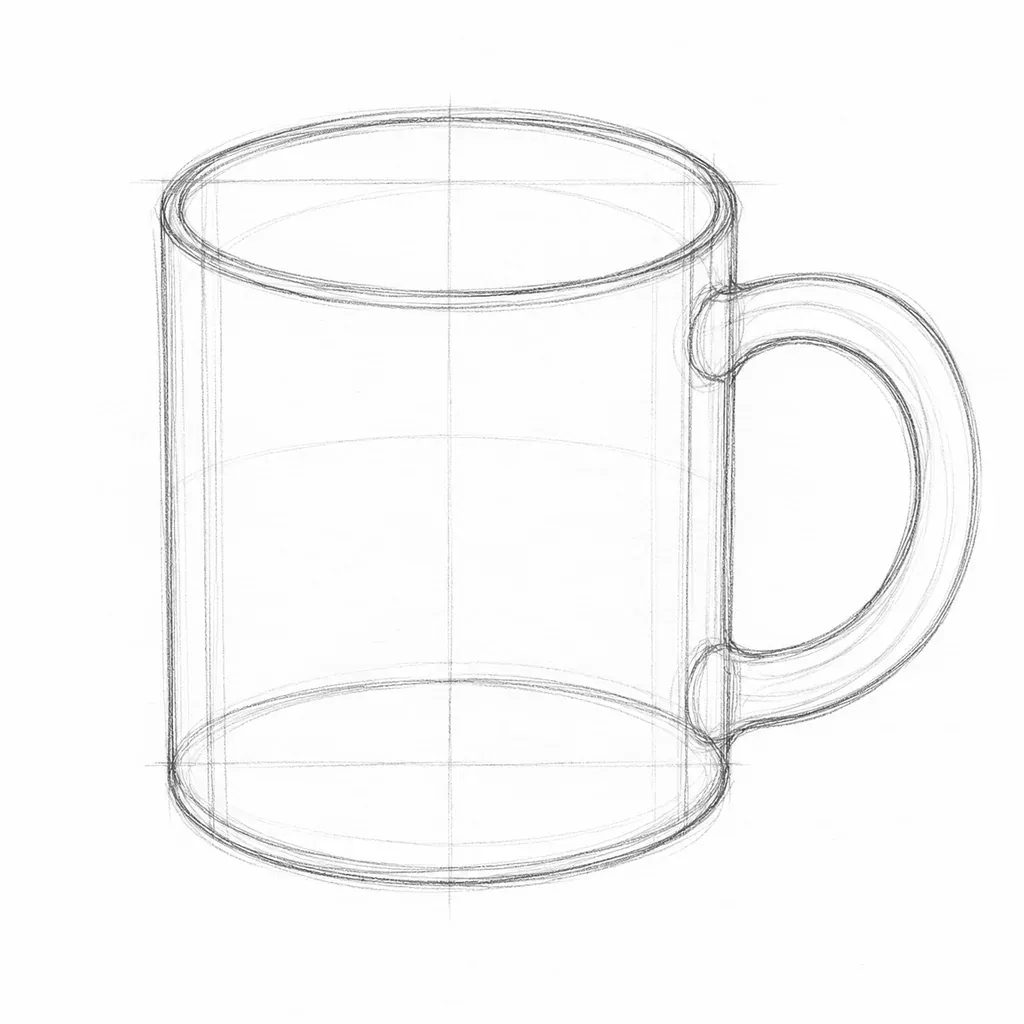
The first example is a construction study. The idea is to draw a ceramic mug from a three-quarter view by stacking a cylinder and two ellipses, then building the handle from two curves. Below is the exact prompt that produced the reference image, meant to be pasted into the Omnely Image workspace to generate a construction sheet — the mug itself is still drawn on paper.
Educational drawing-reference sheet on plain white paper, not a finished illustration. Clean graphite pencil construction sketch of a ceramic mug in three-quarter view, slightly above eye level. Show the construction clearly: a transparent cylinder, ellipses for the rim and the base, and a simple C-shaped handle built from two curves. Light construction lines still visible. No shading, no photorealism, no color, no text, no numbers, no watermark, no logo, no hand, no background objects. Looks like a figure-drawing handout.
GPT Image 2 construction sketch of a three-quarter ceramic mug, 1K, 10 credits, single example. The cylinder, rim and base ellipses, and C-shaped handle are visible, with construction lines left in and no shading.
Paste the prompt above into the Omnely Image workspace to generate a comparable reference sheet. GPT Image 2 and Seedream 5.0 Pro need a paid Omnely plan, run at 10 credits per 1K image, and new users get free credits when they sign up.
Drawing prompts for every subject
What follows is a list of 60 original drawing prompts, numbered through the whole list so the pairing section below can point back to a specific idea. Each one is short on purpose — a prompt is a seed, not a finished artwork and not an AI-image recipe. A gesture is a short timed pose (30 to 90 seconds) that captures weight and motion. A contour is one careful line that traces an edge, usually without lifting the pencil much. A value study uses a few gray tones with no outline to describe form and light.
Beginner warm-ups
1. Draw a ceramic mug from a three-quarter view, starting with a cylinder and two ellipses, and leave the construction lines in.
2. Fill a page with fifteen ellipses at different angles, from flat to nearly circular, as if you were slicing a tube.
3. Draw the same cube three times: eye level, below eye level, above eye level. Mark the horizon line each time.
4. Pick five household objects and sketch each one as a stack of primitives — spheres, boxes, cylinders — before any surface detail.
5. Draw a lemon and a plum side by side in pure outline, then add a single cast shadow for each.
6. Trace the silhouette of your non-dominant hand in one unbroken line, no interior detail.
7. Draw a folded sheet of paper so the creases form at least four clear planes of light and shadow.
8. Sketch a wine glass from two heights, paying attention to how the top and bottom ellipses open up as you lower your eye.
9. Draw a loaf of bread as a soft box, then slice two pieces off and show the crumb texture with hatching only.
10. Make a page of ten five-second gesture lines from a cereal box — the gesture of the object, not the label.
Sketchbook prompts for a daily page
These are sketchbook prompts meant to fill a single page in one sitting: observational, low-stakes, and friendly to a ten-minute window.
11. Draw everything currently on your desk in the order you reach for it, labeled in the margin with the time you drew each one.
12. Your house keys on the table in one continuous contour, no shading, no lifting of the pencil if you can help it.
13. The contents of a coat pocket, arranged in a grid of six small boxes on the page.
14. A corner of the room as a thumbnail three times: once at two inches wide, once at four, once at six, and compare which works best.
15. The same cup of coffee over fifteen minutes — one quick sketch every three minutes as the steam, foam, and level change.
16. Five pieces of fruit from memory, then the same five pieces from life, on the same page.
17. A single page of handwriting samples: your own, a receipt, a book, a sign — treating letterforms as objects.
18. Weather from the window drawn as abstract shapes and values only, no literal clouds or trees.
19. Three self-portraits in a column: one from the mirror, one from a phone photo, one from memory.
20. A map of your morning routine, drawn as rooms and arrows rather than text.
People and figures
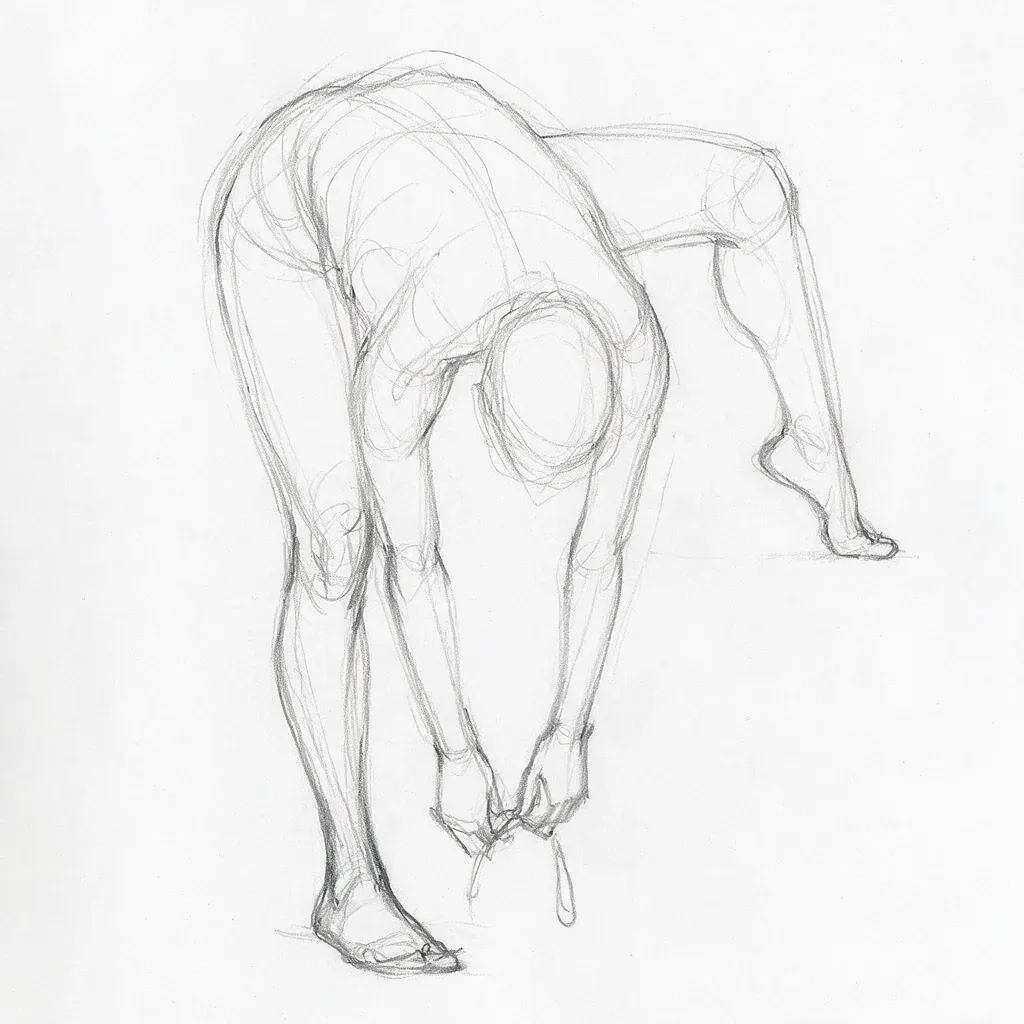
21. A 30-second gesture of someone tying a shoelace, weight on one foot, focused on balance and action rather than clothing.
22. Construct a hand holding a pencil from boxes and cylinders, three-quarter view, with the construction left visible.
23. A seated person seen from behind, with the spine drawn as one flowing line before anything else.
24. Three head drawings using the Loomis-style ball-and-plane construction: front, three-quarter, and profile.
25. A commuter reading a phone — torso and head only, five minutes, no face.
26. Two people in conversation, drawn as two gesture lines that lean toward or away from each other.
27. A foot in a shoe, three-quarter view, with the ankle constructed as a wedge and the shoe as a soft box.
28. A child running, one leg bent and one extended, treated as a single arc from head to trailing foot.
29. A portrait in five values, charcoal or soft pencil, no outlines, light clearly from one side.
30. A crowd thumbnail: twelve human shapes at different scales, drawn only as simplified body gestures.
Animals
31. A sleeping cat, line only, closed eye and tail wrapped around the body — no fur rendering.
32. A standing dog in profile, built first as a large box for the ribcage and a smaller box for the hips, joined by a spine line.
33. A pigeon on a railing, head-to-body ratio exaggerated slightly, drawn in under two minutes.
34. A goldfish seen from the side with the fins blocked in as flat planes before any curves.
35. A horse's head in three-quarter view, with the muzzle constructed as a cylinder attached to a wedge.
36. A bee drawn three times its real size, then at real size, then half size, on the same page.
37. An insect of your choice from directly above, with bilateral symmetry marked by a light centerline first.
38. A rabbit curled into an oval, with ears, paws, and nose as small interruptions of the main shape.
39. Three studies of the same bird — static, mid-flap, gliding — in loose gesture lines.
40. A fish market scene in thumbnails, each fish summarized by one curve for the back and one for the belly.
Places, interiors, and streets
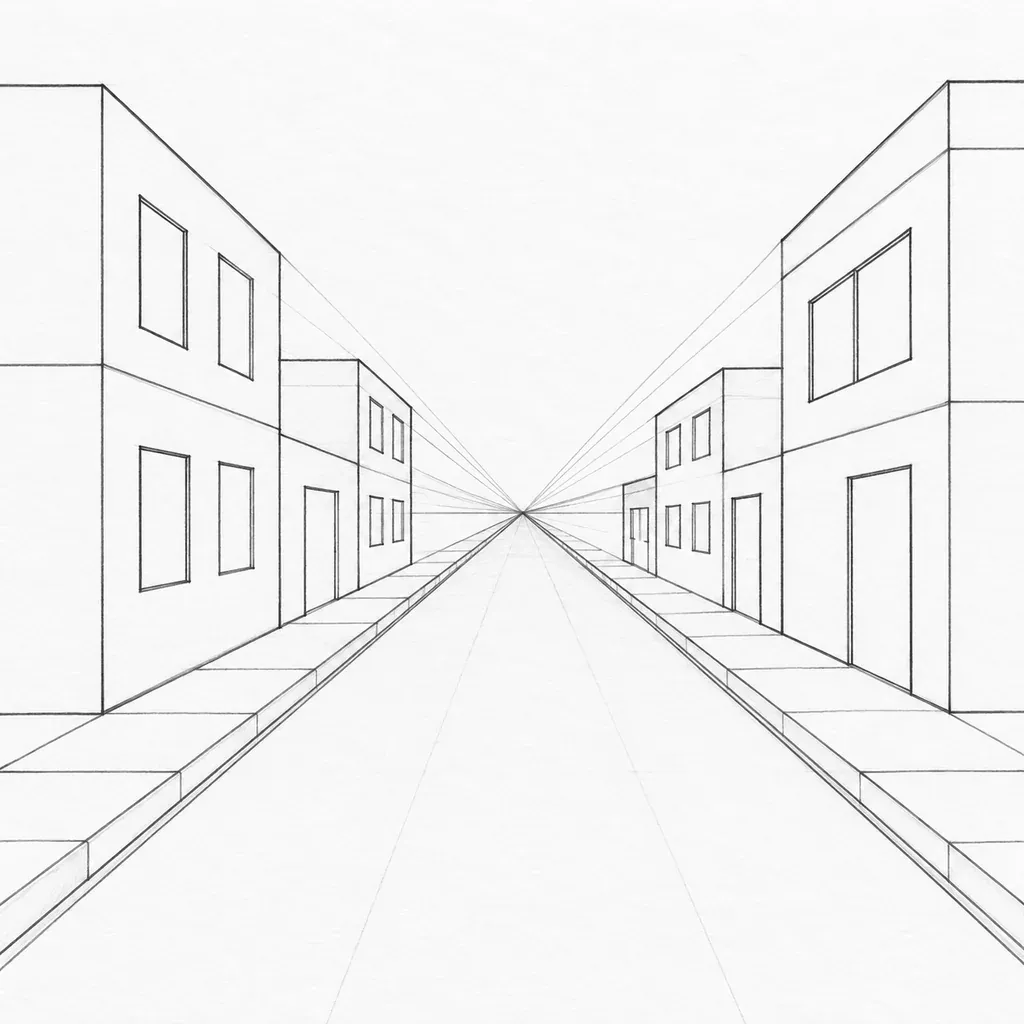
41. A quiet street in one-point perspective, with a clear vanishing point on the horizon and the construction lines running to it.
42. The corner of your kitchen in two-point perspective, with both vanishing points off the page.
43. A staircase from below, treating each step as a stacked box receding into space.
44. A café interior as a value thumbnail: three gray tones, no outlines, light coming from one window.
45. A bedroom in one-point perspective drawn entirely with straight lines — curtains, pillows, lamps all simplified to planes.
46. A view down a long hallway where you have to decide what goes in the middle ground and what stays as a flat shape at the end.
47. A tree-lined path with atmospheric perspective: the closest trees at full contrast, the farthest trees at the lightest gray.
48. A roof shape study: five different rooftops from your neighborhood, just the silhouette.
49. A street at night as a value study, where the lit areas are the paper and the darks are drawn in.
50. A doorway drawn twice: once straight-on and flat, once at a steep three-quarter angle.
Objects and still life
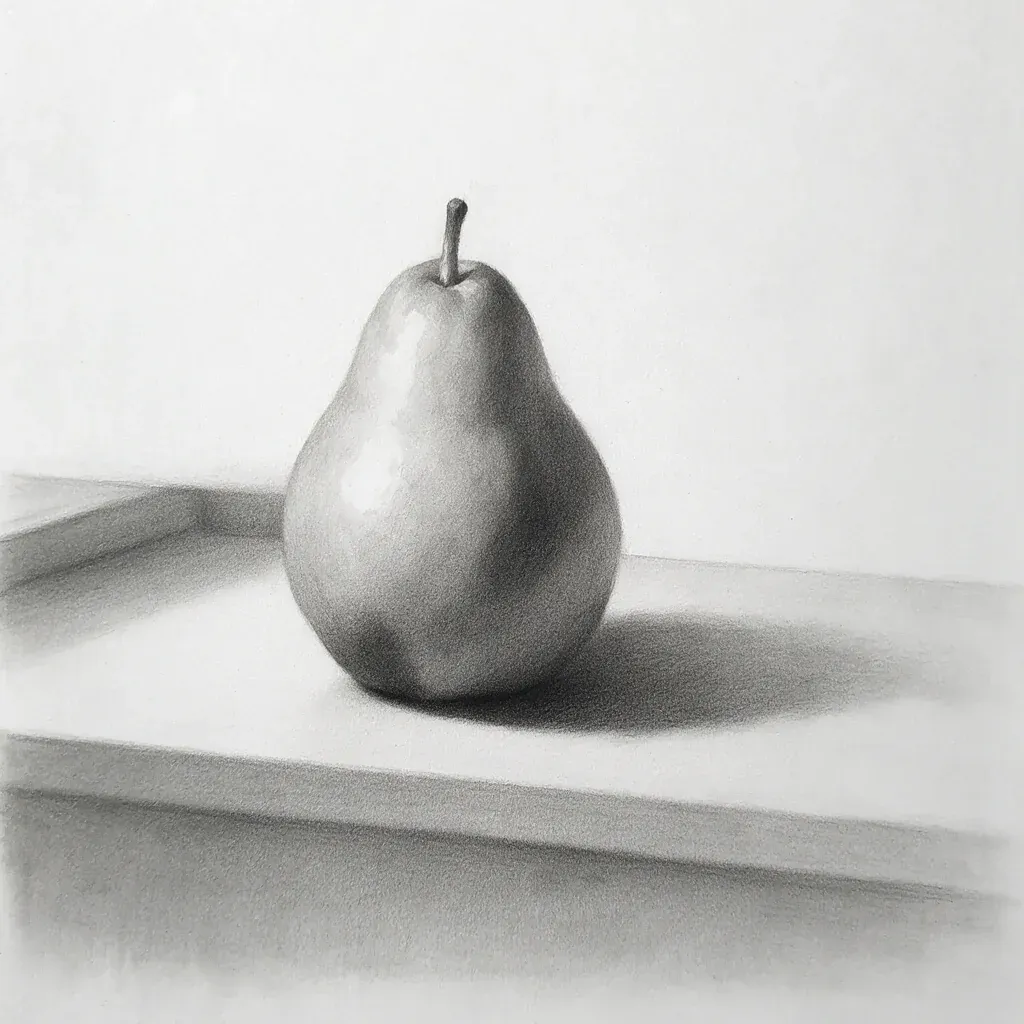
51. A pear on a windowsill in five values, with no outlines — a strict block-in before any blending.
52. A pile of three books with the spines facing different directions, all built from the same box construction.
53. A single leaf drawn four ways: outline, contour, value, and gesture.
54. Your phone, face down on a textured surface, with the reflection and shadow treated as equal parts of the drawing.
55. A clear glass half-full of water, where the ellipses of the rim and the waterline do not match.
56. A pair of scissors seen from directly above, drawn as two mirrored shapes rather than one object.
57. A bowl of eggs in which no two eggs are the same ellipse, and every cast shadow points to the same light source.
58. A still life of three tools from a drawer, arranged so one overlaps each of the others.
Imagination and invented scenes
59. Invent a small dragon perched on a teapot, built from simple shapes first — ovals for the body, cones for the horns, the teapot as a sphere plus a cylinder.
60. Design a chair that only a person with four arms could sit in, then draw it from two angles and label the parts.
Pair selected ideas with an AI reference sketch
A reference image is a study aid. Look at it for structure, light direction, or the gesture of a pose, then draw on paper. Do not trace it as if it were certified anatomy or a finished plate — single AI outputs can get proportions, counts, or balance slightly wrong, and one example is not a leaderboard. The eight references below were each generated once on Omnely at 1K (10 credits each) with either Seedream 5.0 Pro or GPT Image 2, and the captions note where the output drifts from the written idea.
1. Mug construction (idea 1)
The construction sheet for the three-quarter ceramic mug is already at the top of this page. Use that image as the structural reference for idea 1 and move on to the next sheet.
2. Keys contour (idea 12)
Educational contour drawing on plain white paper, not a photograph. A small set of house keys on a ring, including one or two keys and a simple tag, drawn in a single confident graphite contour line with almost no lifting of the pencil. Slightly uneven observational line, no shading, no photoreal metal, no color, no text, no watermark, no logo, no background. Looks like a contour-drawing exercise, not a product photo.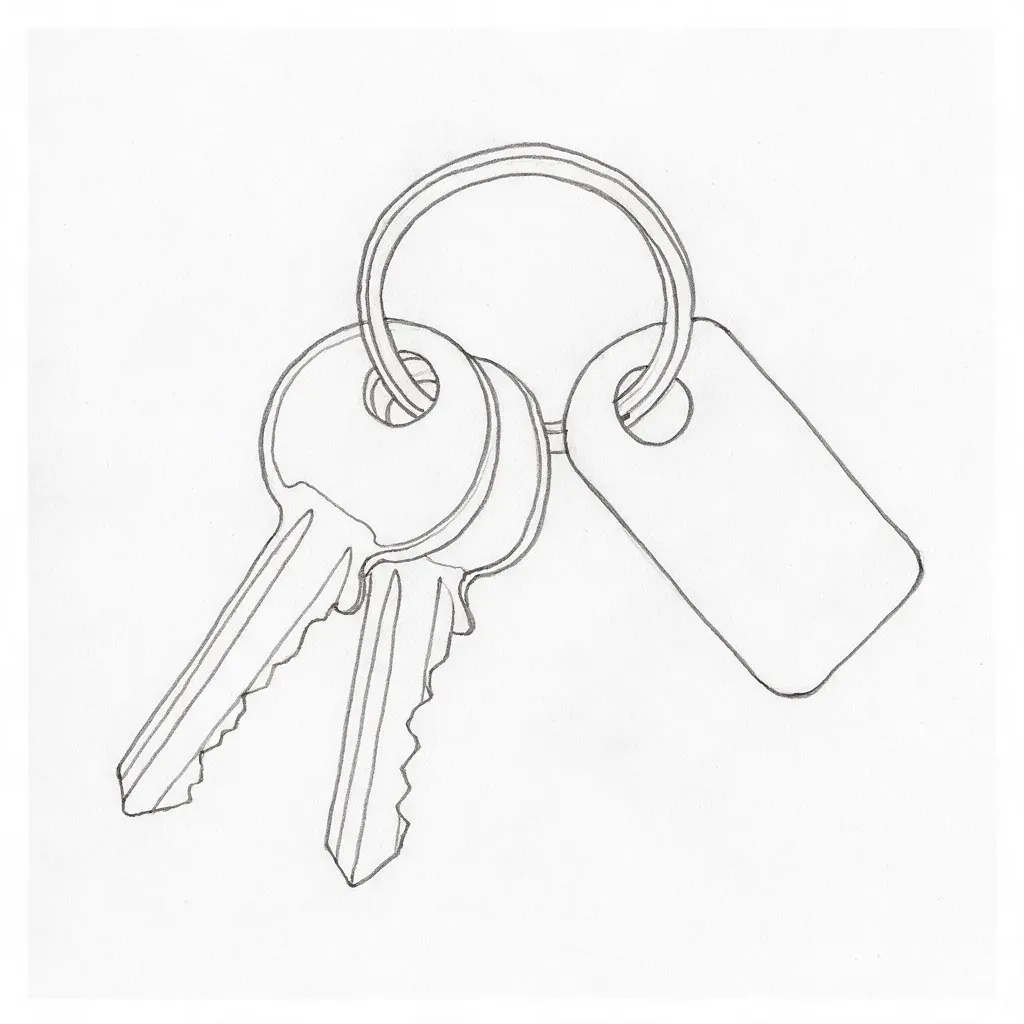
Seedream 5.0 Pro contour of two keys on a ring with a blank tag, 1K, 10 credits, single example. The line is tidy and careful rather than a single unbroken observational contour, and there is no shading.
3. Shoelace gesture (idea 21)
Educational timed gesture drawing on plain white paper, not a photograph and not photorealistic. Loose, flowing graphite gesture lines of a person bent forward tying a shoelace, weight on one foot, the other foot raised on the toes. Capture action and balance, not clothing detail or a face. Overlapping searching lines, like a 30-second life-drawing pose. No photoreal skin, no color photo look, no text, no watermark, no logo, no background.
Seedream 5.0 Pro loose graphite gesture of a figure bent tying a shoelace, 1K, 10 credits, single example. Searching construction lines are visible and the face is not detailed. The rear leg is stretched quite far back, so the balance is more theatrical than a casual stoop — check the pose against a live model.
4. Hand construction (idea 22)
Educational drawing-reference sheet on plain white paper. Graphite construction sketch of an adult right hand holding a short wooden pencil, three-quarter view. Build the palm as a boxy wedge, the fingers as tapered cylinders, the thumb as a separate form, with light construction lines still visible. Neutral study pose, no jewelry, no photoreal skin, no color, no shading beyond a hint of form, no text, no watermark, no logo. Looks like an anatomy-for-artists construction drawing, not a photograph.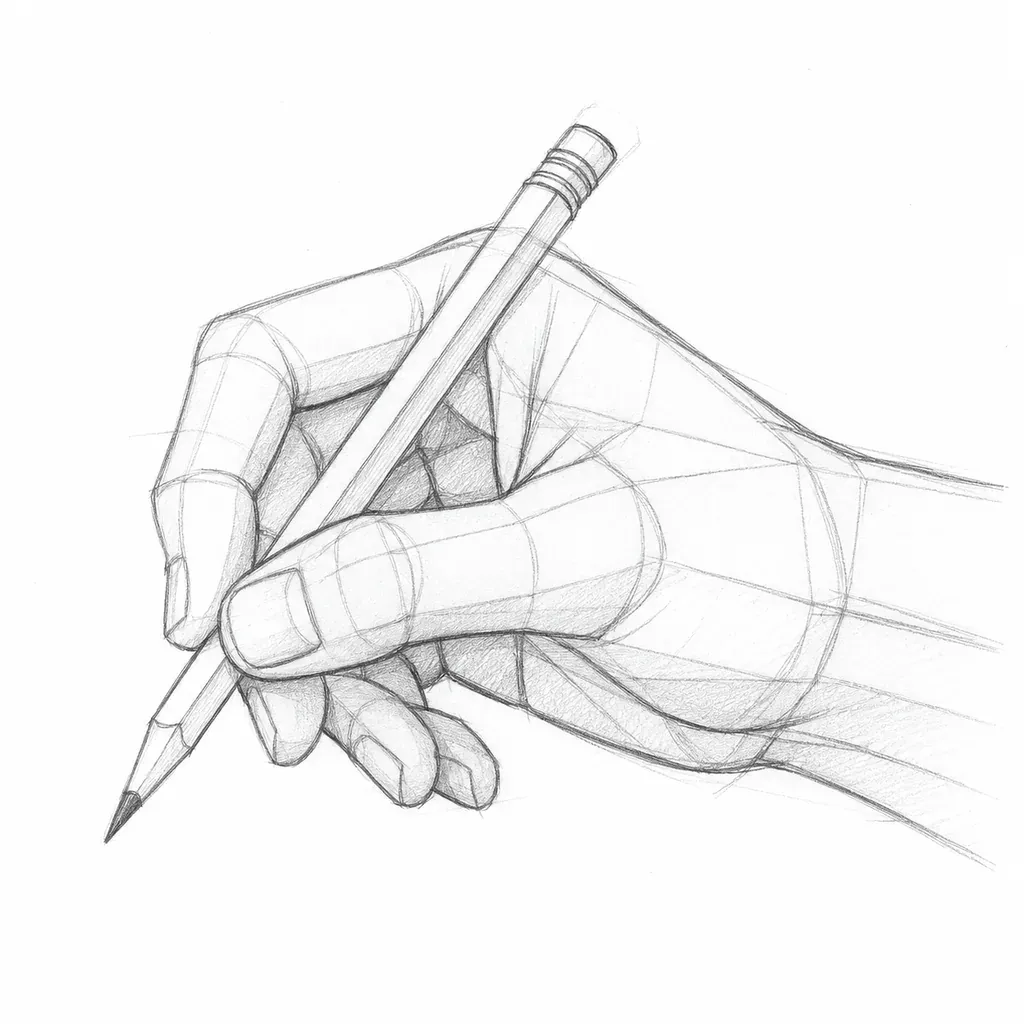
GPT Image 2 construction sketch of a right hand holding a pencil, 1K, 10 credits, single example. Box and cylinder forms stay visible under a light graphite finish. The grip is usable as a study; finger thickness and overlap should still be checked from life.
5. Sleeping cat line art (idea 31)
Educational drawing-reference sheet on plain white paper. Clean confident graphite contour line-art of a short-haired domestic cat sleeping in profile, curled on its side, head on its paws, tail wrapped around. Simple interior lines only for ears, closed eye, paws and tail. No fur rendering, no shading, no photorealism, no color, no text, no watermark, no logo, no background objects. Looks like a clean zoological line reference, not a cute sticker.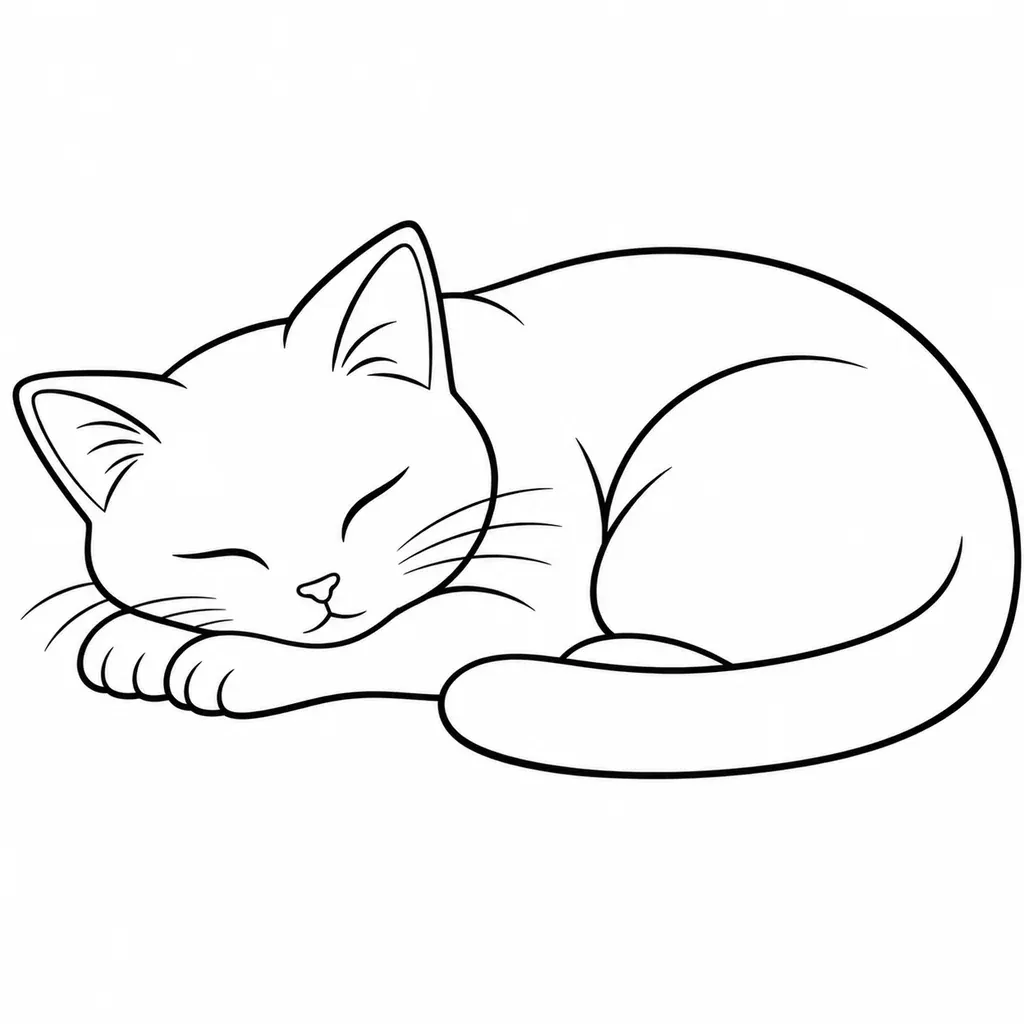
GPT Image 2 clean bold line art of a curled sleeping cat, 1K, 10 credits, single example. The drawing is more stylized and coloring-book than a construction or contour study, and the head is a three-quarter view rather than a strict profile. No fur, no shading.
6. Street in one-point perspective (idea 41)
Educational drawing-reference sheet on plain white paper. Graphite architectural construction sketch of a quiet street in one-point perspective. A clearly marked vanishing point on the horizon, light construction lines running to it, simple boxy buildings on both sides, a sidewalk, a curb, and a few window rectangles. No cars, no people, no textures, no photorealism, no color, no text labels, no watermark, no logo. Looks like a perspective-class handout, not a city illustration.
GPT Image 2 one-point street construction, 1K, 10 credits, single example. Boxy buildings, sidewalks and window rectangles run to a clear vanishing point, with the construction lines left visible and no people or cars.
7. Pear value study (idea 51)
Educational charcoal or graphite value study on plain white paper, not a photograph. A single pear sitting on a plain windowsill, lit from the left by soft window light. Use about five gray values to describe form, from a bright highlight to a soft core shadow and a light cast shadow. No outlines, no color, no photoreal fruit texture, no text, no watermark, no logo, no extra objects. Looks like a still-life value study from a drawing class.
Seedream 5.0 Pro grayscale value study of a pear on a sill, 1K, 10 credits, single example. Light comes from the left, with a clear highlight, form shadow and cast shadow, and no outline. More fully rendered than a five-value block-in, but still a study, not a photograph.
8. Dragon on a teapot (idea 59)
Educational construction sketch on plain white paper, not a finished illustration and not a photograph. A small invented dragon perched on a round teapot, built from simple shapes: spheres and ovals for the head and body, cones for the horns, a tapered tail wrapping the teapot handle, the teapot itself a sphere plus a cylinder spout. Light construction lines still visible under a clean graphite outline. No color, no scales rendered in detail, no shading, no text, no watermark, no logo. Looks like a concept-art construction drawing, not a polished fantasy painting.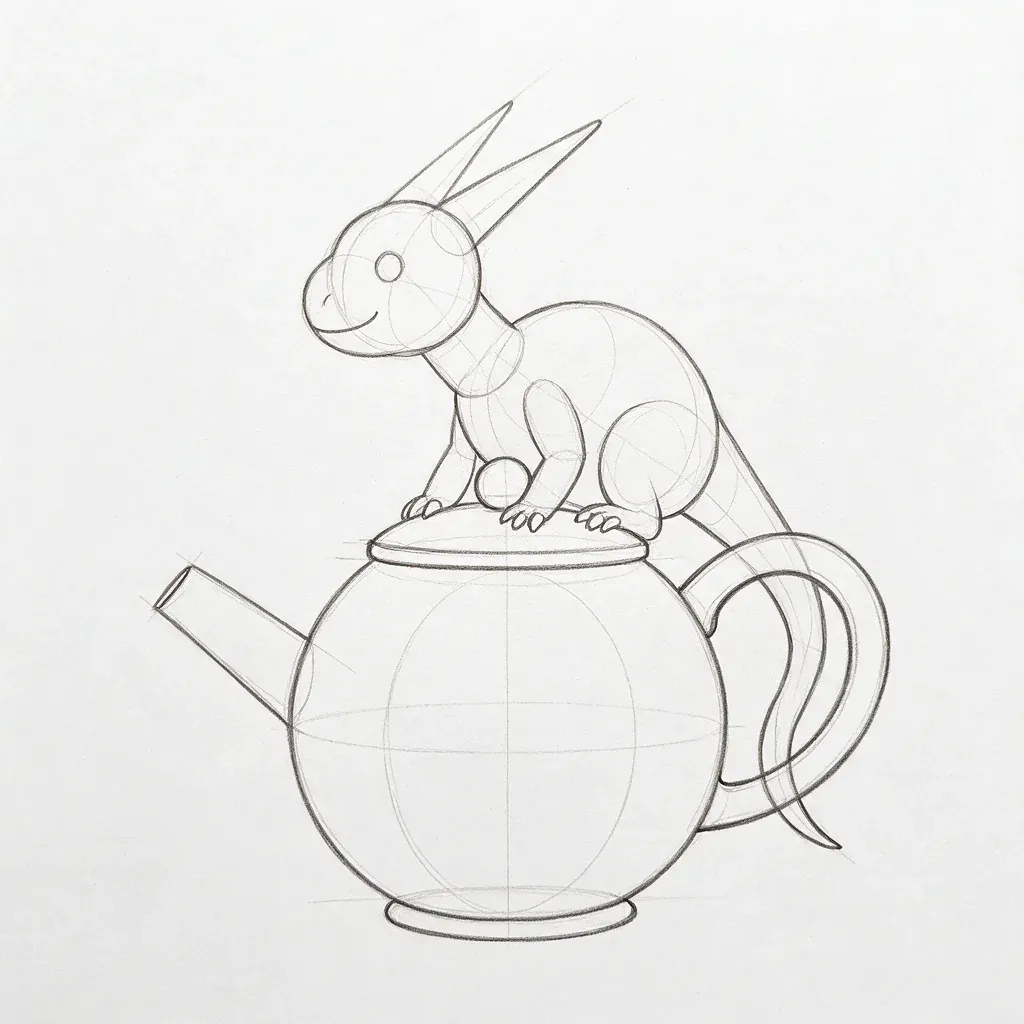
Seedream 5.0 Pro construction sketch of a small invented dragon perched on a spherical teapot, 1K, 10 credits, single example. Ellipses and simple body forms are still visible. The dragon is stylized and friendly rather than anatomically detailed, which matches a shape-first study.
Every prompt box above is copy-ready for the Omnely Image workspace. For style-forward work in oil, gouache, linocut, or anime instead of reference studies, AI art prompts by style and medium is the sibling page.
Drawing prompts FAQ
What are drawing prompts?
Short, specific ideas for something to draw by hand — a subject, a constraint, or a study type. The list above gives 60 of them, grouped by beginner warm-ups, daily sketchbook pages, people, animals, places, objects, and invented scenes. A prompt is a seed; the drawing is what the pencil does with it.
How do sketchbook prompts fit in?
Sketchbook prompts are the subset meant to fill a single page in a short session, usually observational and low-stakes. Ideas 11–20 above are the sketchbook-prompt group: the desk, the coat pocket, the coffee cup over fifteen minutes. They are designed for a recurring habit rather than a finished piece.
Is the AI image the finished artwork?
No. The images on this page are optional reference sketches — construction, contour, gesture, line art, or value. They exist so there is something concrete to study for structure, light direction, or pose before putting pencil to paper. Treat them the way a life-drawing class treats a reference photo: useful, imperfect, and never a substitute for drawing from life.
Where should style-and-medium prompts go instead?
For prompts that produce finished AI art in oil, gouache, sumi ink, linocut, pixel, or anime, see AI art prompts. For 40 copy-ready image-generation prompts across product, portrait, flat vector, and food styles, see AI image prompts. The full index of chat, image, and video prompt packs lives in the AI prompts hub.
Pick an idea from the 60 above, set a timer, and draw it by hand. If a reference would help — a construction sheet, a gesture page, or a five-value study — paste the matching prompt into the Omnely Image workspace and generate one. GPT Image 2 and Seedream 5.0 Pro require a paid Omnely plan, free credits are included for new users to try, and every reference image on this page cost 10 credits at 1K.