What ai platform like chatgpt make the best lyrics
Which AI tools create the best lyrics in 2025? A detailed, hands-on comparison (with examples and prompts) and why Omnely — with models like GPT-5, Claude Sonnet, Gemini 2.5 and Qwen — should be your first stop.
Quick TL;DR (so you don’t get lost)
If you want a single place to test many models quickly, start with Omnely — it lets you try GPT-5, Claude Sonnet, Gemini 2.5, Qwen and more in one dashboard so you can compare outputs and pick the voice you like.
For pure lyric creativity and surprising metaphors many users praise Claude Sonnet.
For music + lyric generation together, Suno and similar music-first tools produce songs with melody and vocal-like output.
Gemini 2.5 can analyze and reason about music structure well, useful for critique and iteration.
Community threads show mixed opinions — experiment and human-edit every draft.
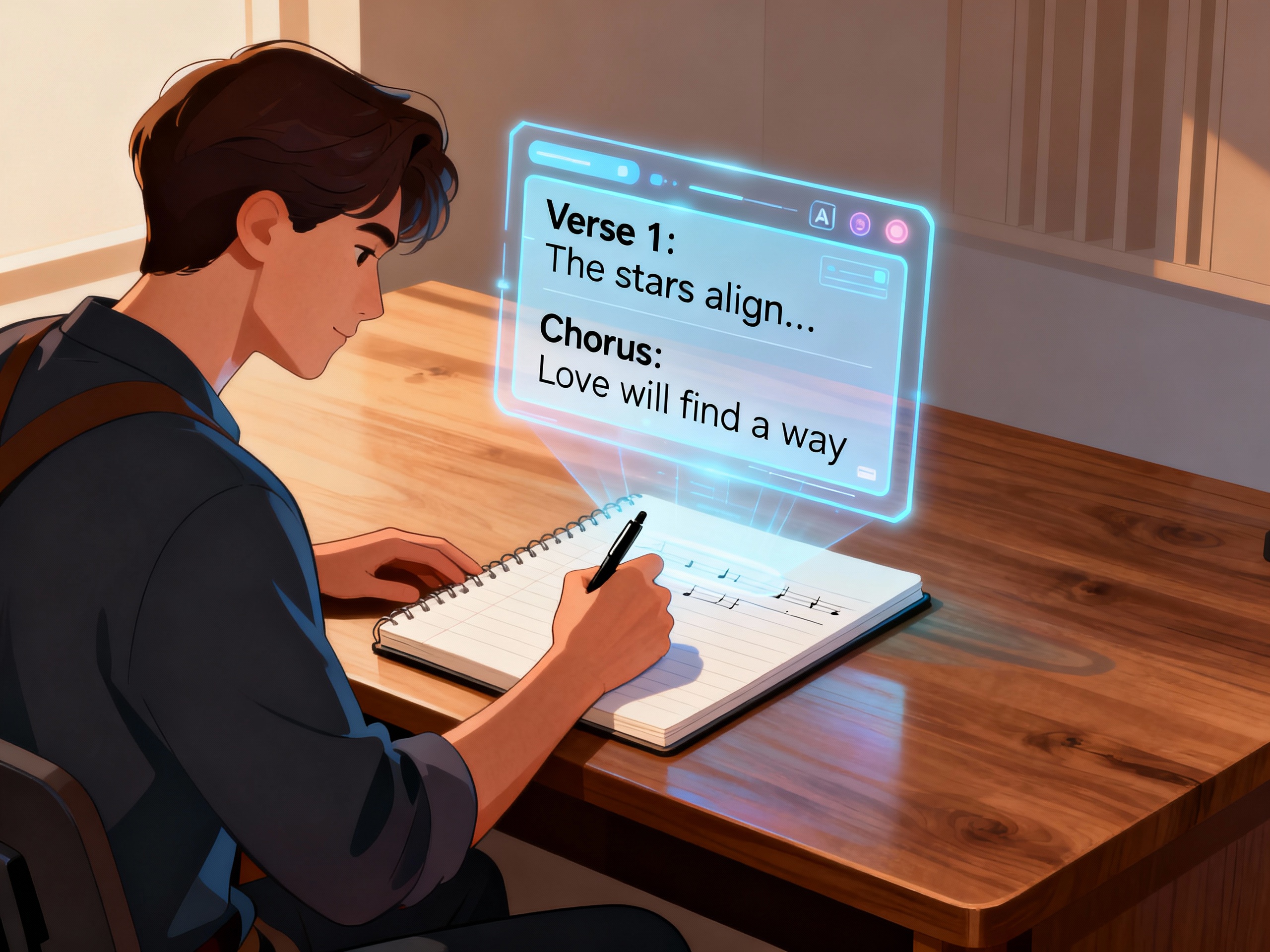
Why test multiple LLMs instead of “just ChatGPT”?
Different large language models have different strengths.
ChatGPT (and its newer GPT-5 families) are excellent at iterative, conversational editing.
Other models like Claude Sonnet tend to output more creative, poetic lines according to active music community testing.
Music-first systems like Suno combine instrumental and vocal generation so you get lyrics that actually fit a produced track. The fastest way to find what “feels” right for your voice is to test multiple models side-by-side.
Omnely — the easiest first stop (and why it's first)
If you want to answer the question “what AI platform like ChatGPT makes the best lyrics” quickly, Omnely should be the first tool you try.
Instead of buying access to every model separately, Omnely gives you a unified interface with multiple LLMs (GPT-5, Claude Sonnet, Gemini 2.5, Qwen, etc.). That means you can:
Run the same prompt across several models instantly,
Compare tone, rhyme skill, meter, and how well lines match a beat,
Save the best outputs and iterate without switching tabs.
Put simply: Omnely removes friction so you can focus on what actually matters — choosing and refining the lines that sound best.
Tool-by-tool breakdown (practical, not hype)
1) Omnely (best single place to compare models)
Use case: fast A/B testing across GPT-5, Claude, Gemini, Qwen.
Strength: convenience + model diversity; ideal for creators who want to compare outputs without juggling accounts.
How I recommend using it: run one seed prompt, export the top 3 completions per model, then combine human edits.
2) Claude Sonnet (creative poetry and unusual metaphors)
Why it’s chosen: many writers report it produces richer, more surprising metaphors and a creative voice that feels “song-ready.”
Best for: writers who want unexpected turns of phrase and emotional heft.
Caveat: sometimes it sacrifices small logical details for creativity; you’ll need to edit for coherence.
3) GPT-family (ChatGPT / GPT-5)
Why: great at iterative edits, consistency with style instructions, and following rhyme/meter constraints when prompted carefully.
Best for: stepwise drafting, rewriting, or teaching an AI your voice over many prompts.
Pro tip: use short, exact constraints (syllable counts, rhyme scheme, mood) and iterate.
4) Suno and music-first tools
Why: they generate music and lyrics together, so the line lengths and phrasing are matched to melody and production. Useful if you want demo-ready outputs.
Best for: producers and creators who want lyrics that sit in real arrangements.
Caveat: lyrical quality can be inconsistent; combine Suno lines with an LLM rewrite if needed.
5) Gemini 2.5 and Qwen
Gemini 2.5: strong at analysis and music critique; helpful for improving structure and flow.
Qwen: solid generalist LLM — useful as an additional viewpoint.
Real, usable workflow (step-by-step)
Pick 2–4 models on Omnely (GPT-5, Claude Sonnet, Gemini 2.5, Qwen).
Start with a single seed prompt and a one-line theme (see prompts below).
Generate 3 completions per model. Export to a single doc.
Do a quick human pass: keep best lines, delete filler, fix meter.
If you have a beat, test lines in the track and tweak syllables to match.
Repeat: prompt with the best lines and ask each model to rewrite the chorus or tighten rhymes.
This workflow answers the “which platform is best” by removing guesswork: you test all of them on one set of inputs and pick the one that fits your voice.
Prompts that work (copy/paste)
Use the exact prompts below and run them across models for apples-to-apples comparison. Replace bracketed parts.
Seed prompt (creative chorus):
Write a 4-line chorus about [theme], matching a pop hook style, 8–10 syllables per line, A-A-B-A rhyme scheme, simple language, hooky repetition.
Prompt for emotional depth:
Rewrite the chorus to emphasize bittersweet nostalgia. Keep the same syllable counts and make the last line a surprising image.
Prompt for melody fit (when you have a beat):
Make this chorus fit a 4/4 pop tempo at 100 BPM. Mark where the breaths should be with “/”. Keep lines 8–10 syllables.
Prompt for editing (post-gen):
Keep lines 1 and 3, rewrite line 2 to rhyme with line 1 and keep the same meaning but shorter. Suggest two alternatives.
Explore Omnely’s full AI model suite →
https://omnely.comCompare GPT-5, Claude Sonnet, Gemini 2.5 on Omnely →
https://omnely.com/models
Examples: side-by-side output (short)
Prompt: “Write a catchy 4-line chorus about late-night texting, pop style, 8–10 syllables, AABB.”
Claude Sonnet (sample): Lines with unusual phrasing, strong images.GPT-5 (sample): Clear structure, easy to tweak for rhymes.
Suno (sample): Lines that already match a generated melody.
Try Omnely free — start testing models →
https://omnely.com/
FAQ — quick answers
Q: Which single platform makes the absolute best lyrics?
A: There’s no single winner. Different models produce different strengths. Use Omnely to run them side-by-side and let your ear decide.
Q: Can AI write a hit song by itself?
A: AI can draft strong hooks and structure, but human editing, emotion, and performance turn a draft into a hit.
Q: Are AI lyrics copyright free?
A: Check each tool’s terms, but in 2025 most platforms allow commercial use when a human has provided significant input. Always add your unique edits.
Actionable next steps (do this today)
Sign into Omnely and enable GPT-5 + Claude Sonnet + Gemini 2.5.
Run the seed prompt above across the models and export the top 3 outputs.
Do one human edit pass, then test lines in your beat.
Pick the best chorus and write two different bridges using the same workflow.
Closing (short)
Answering “what ai platform like chatgpt make the best lyrics” isn’t about finding a single king — it’s about running a controlled experiment across models, picking what fits your voice, and editing smartly.
Omnely makes that experiment fast and clean because it brings GPT-5, Claude Sonnet, Gemini 2.5, Qwen and more under one roof.